• Facebook
  • YouTube
  • Pinterest
  • Instagram
  • RSS
Subscribe
Editorial Gold

Monterey Bay Parent

Design Gold
Read The Current Issue
MenuClose
  • Things To Do
    • Activities & Sports
    • Family Fun
    • Monterey Bay Aquarium
    • 250 Things to Do in California: The Complete Family Guide
    • Travel
    • Monterey County Neighborhood Guide
  • Events
  • Family
    • Health & Wellness
    • Home & Garden
    • Local News
    • Parenting
    • Cover Kids
    • Birthday Club
    • Military Families
  • Issues
  • Education
    • Back to School Expo
    • Education Directory
  • Camp
    • Camp Directory
    • Summer Fun and Camp Expo
  • Holidays
    • Birthdays
    • Christmas & Hanukkah
    • Easter
    • Fall Fun & Halloween
    • Thanksgiving
    • Valentine’s Day
  • More
    • About Us
    • Contact Us
    • Advertising Info
    • Our Current Issue
    • Family Favorites
    • Cover Kids
  • Search
Monterey Bay Parent » music

Harmony Garden: A New Musical Sculpture Space Coming to Carmel

By Monterey Bay Staff | May 26, 2026

A local leadership program is creating an outdoor installation where families can make music, explore art, and connect with Carmel’s creative spirit.

A new outdoor destination for families is taking shape in Carmel-by-the-Sea — and it’s one where touching, tapping, and playing are not just allowed, but the whole point.

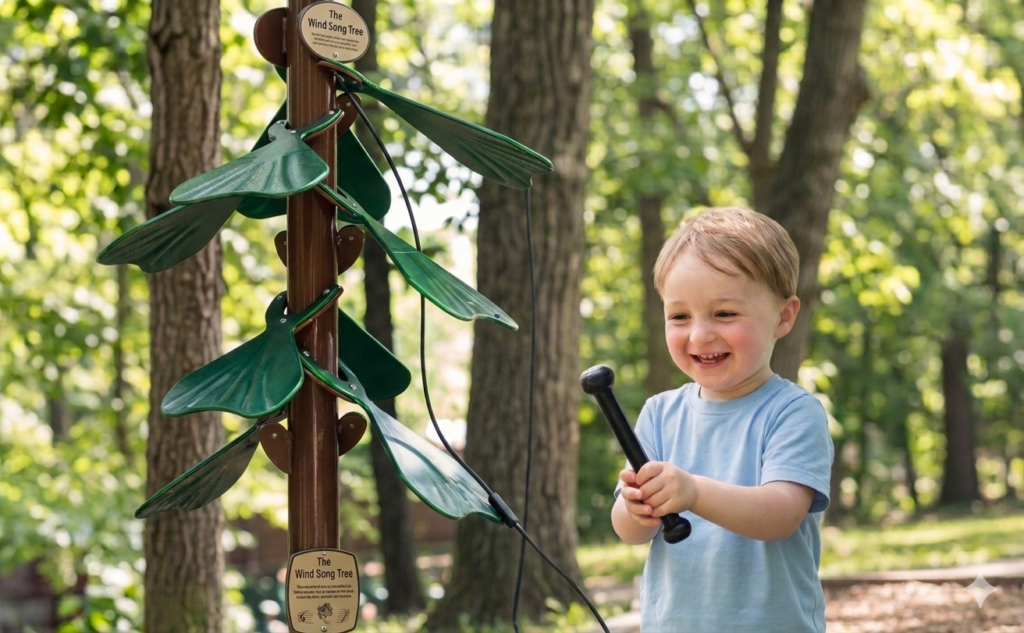
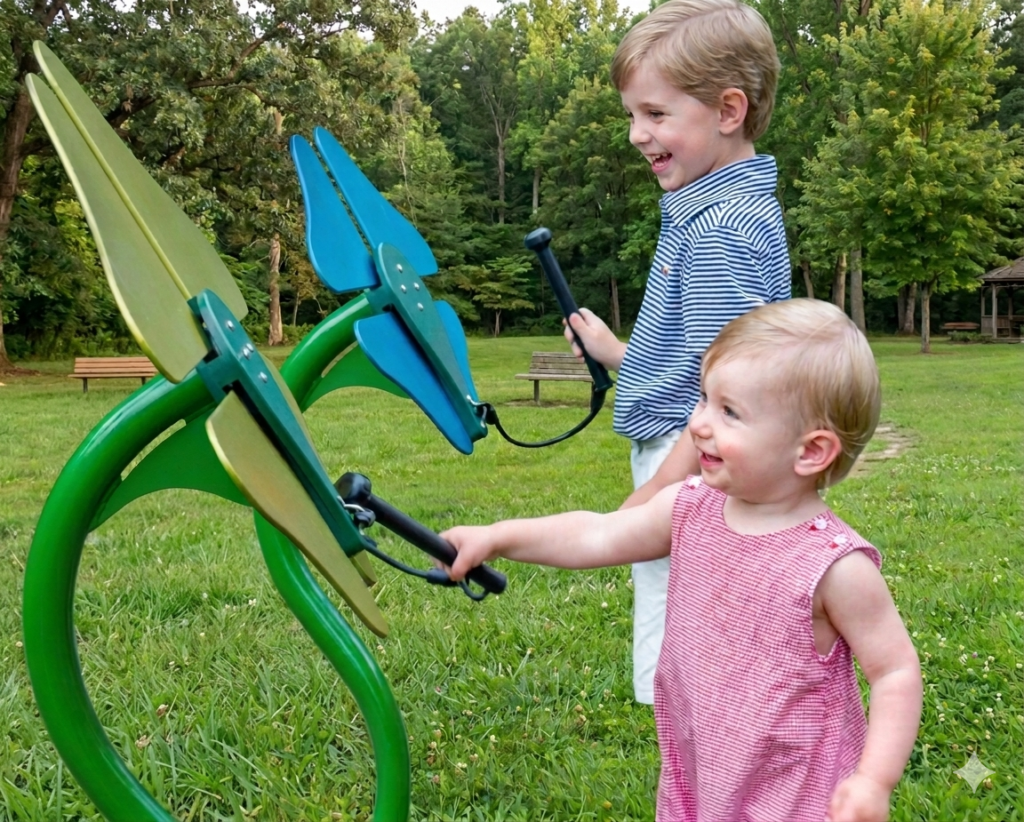
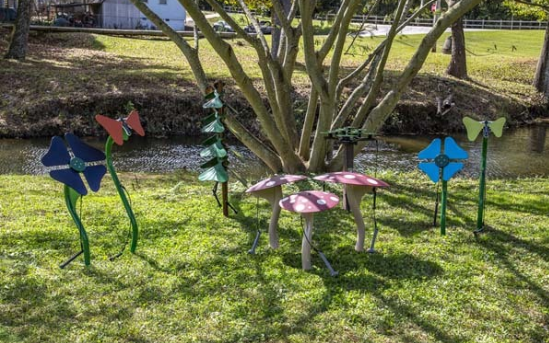
The Harmony Garden is an outdoor musical sculpture installation being developed by the Leadership Carmel Class of 2026 as a legacy gift to the community. Designed for all ages, the space will bring together sculpture, music, and landscape in a setting where visitors can explore at their own pace and make sound together.
What to Expect

Each element in the Harmony Garden functions as both artwork and instrument. Children can experiment freely; adults can linger and listen; families can discover music together in ways that feel natural rather than structured. The experience is designed to be open-ended — there’s no right way to engage.

The installation honors Carmel’s deep artistic roots, from its origins as an early 20th-century artist colony to its ongoing commitment to culture in everyday life. The Harmony Garden is meant to extend that tradition in a form that’s participatory, playful, and accessible to all.

Built to Last

The sculptural elements will be crafted from weather-resilient materials, with a stewardship plan in place for long-term care. The project is organized by Leadership Carmel, a nine-month civic leadership program established by the Carmel Chamber of Commerce Foundation in 2020. Each class completes a community betterment project — the Class of 2023, for example, contributed inclusive play equipment to a local park.

How Families Can Get Involved

The Harmony Garden is still in development, and the organizers are welcoming community support in a variety of forms — from monetary contributions (any amount) to in-kind help with permitting, site prep, and logistics. Families can also sponsor individual sculptural or musical elements, or arrange a family or memorial dedication.

To learn more or get involved, visit the Leadership Carmel website.


The Harmony Garden is a project of the Leadership Carmel Class of 2026, organized through the Carmel Chamber of Commerce Foundation.

Filed Under: Attractions, Local News Tagged With: Carmel, free, music

How Music Can Clue Parents in on a Child’s Emerging Identity

By Robert (Rob) S. Weisskirch | September 23, 2023

During adolescence, most kids start to form a sense of who they are as individuals–what we know of as their sense of identity. Identities don’t just show up one day, they emerge from childhood experiences, parental and family cultivation, and kids’ interests and personalities, among other aspects. Adolescence is often the center of identity formation and continues well into adulthood. Many of us can recall the changing of clothing styles, interests, activities, and the attention paid to fitting in and belonging to figure out who we are. One thing I always point to as an early sign of identity development is when kids become “musically aware” (my term)–when kids start listening to their own choice of music and want to control the music that is heard in the car and at home. As a parent, I now have to negotiate with a ten-year-old for what we listen to–and I can see glimmers of her identity starting to come into tune.

Her choices in music emerge from a combination of sources including from my wife who listens to more current music than I do. Some of my daughter’s choices stem from music her friends discuss, some from kids from summer camp, and some from video shorts she watches with background music and accompanying dances. She has created a playlist of songs on a streaming service from the music she’s heard. My daughter has become a “Swifty,” listening to Taylor Swift songs and singing along loudly. If a certain song comes on the radio in the car, I am told to “turn it up” and am given an elementary-school version of Carpool Karaoke. She will also regularly quiz me on who is singing whatever song is playing, which I fail nearly every time. These assertions about the songs she likes and doesn’t like are part of her internal process of figuring out who she is.

As her musical tastes provide evidence, she is navigating her path and planting the seeds of a growing identity. She is moving increasingly towards becoming her own person and choosing to be the person she wants to be–and listening to the music that appeals to her.

My wife and I are cognizant in trying to shape the values and ideals we hope our daughter adopts into the person she will become. We talk about how we treat others is a reflection of who we are. We regularly remind her to speak to us as her parents when she gets “sassy” (I am using a gentle term for this behavior). We remind her of how to treat her grandparents, whom she will sometimes take for granted. We tell her about being aware of kids who are new or are reluctant to join. We encourage the positive traits we see her display, like confidence, bravery in performing, and kindness towards others, and dissuade her from holding on to the undesirable ones, like being deceitful with us or lacking in manners at the dinner table. At the same time, she is trying to figure out relationships with others and will ask, “How come so-and-so does this?” My wife and I then try to posit some suggestion or possible rationale and leave her with, “Do you want to be that kind of person?” This query helps her clarify how she wants to present herself.

As a toddler, my daughter had favorite songs she would request ranging from “Goldfish” by the Laurie Berkner Band to AC/DC’s “Hells Bells” (all about the intro)–but these selections were not because she connected who she is to the music but more about the novelty of the tune. Now, we hear her preference for female-fronted power and pop ballads–Taylor Swift, Katy Perry, Lady Gaga, Meghan Trainor–as well as popular bands like Imagine Dragons and AJR and with a sprinkling of sea shanties and assorted Disney movie songs. I don’t mind her choices, and I think we’ve steered her away from songs with explicit lyrics. It is easy to see that her connection to the music she likes is increasing.

She will likely put on earbuds or headphones and retreat from sharing her music choices at some point. Until that happens, I will happily listen to “Shake it Off” again.


Robert (Rob) S. Weisskirch, MSW, Ph.D., CFLE, is a Professor of Human Development at California State University, Monterey Bay, and a Certified Family Life Educator. He and his wife are parents to a chatty, elementary school-aged daughter and reside in Marina.

Filed Under: Parenting Tagged With: Father's Day Column, music

The Soundtrack to Success

By Monterey Bay Staff | August 28, 2023

Does your child love to sing? Love plunking on the piano or pounding on the drum? Do you think you might have a future musician in your home? Let’s look at some short and long term benefits of music lessons.

DISCIPLINE

Learning to play beautiful music doesn’t happen overnight. All students must start from the beginning playing scales and mastering basic skills. In our society instant gratification is the norm. Music teaches the value of patience and discipline because children must set aside time for practice and make it part of their routine in order to further their skills.

WORK ETHIC

Music teaches children a good work ethic because they see the value of practice as they improve and reach new achievements. Students will learn how dedication creates good results, while failing to do all the necessary practice results in mediocre results. These lessons carry into school studies and future employment.

MEMORY

Is your child always forgetting things? Music requires kids to practice memorization. Even if sheet music is used, students memorize how to play each note and the sheet music eventually becomes a guide. Students can use their developing memorization skills in a variety of ways in school and at home.

MATH AND LANGUAGE SKILLS

Music helps develop math and language skills that gives kids an edge in school. “Students who have early musical training will develop the areas of the brain related to language and reasoning. The left side of the brain is better developed with music.” (National Association for Music Education)

TEAMWORK

Teamwork isn’t just for sports. Music students may have an opportunity to participate in a band or orchestra. This provides kids experience working as a team and a sense of camaraderie. Teamwork develops social skills that they will use for a lifetime.

CONFIDENCE AND SOCIAL DEVELOPMENT

Kids will gain confidence as they begin to perform music for an audience. This helps kids learn to face their fears and builds self esteem. As kids build up this confidence, they are more likely to boost their communication skills and have increased social development.

LIFELONG CHALLENGE

In music, there is always room for improvement.  This creates the opportunity for students of any age to improve and challenge themselves for many years to come.

STRESS RELIEF

Playing an instrument can be an outlet for kids. Music can be relaxing and a form of stress relief, as well as a way to express yourself creatively. Kids who have this outlet are less likely to find negative ways to relieve stress, like drugs and alcohol.

EXPRESSION AND CREATIVITY

Kids who play music are trained to think creatively. The ability to think outside of the box in many other situations is a coveted asset among many employers.

IMPROVED COORDINATION

Kids who play instruments develop their hand-eye coordination. Just like in sports, playing an instrument requires these skills and develops their motor skills.

HIGHER TEST SCORES

Studies show that children who are exposed to music education have higher SAT scores and better grades in school overall. (Children’s Music Workshop)

INTRODUCES CHILDREN TO OTHER CULTURES

Through music kids are exposed to other cultures, teaching them awareness and empathy for others. This helps them become more accepting of other cultures at an early age.    

My daughter recently started taking piano lessons. As I sat in the room observing her first lesson, I witnessed something. As she played her first chord, a smile spread across her face. It was clear she has a true love for music. To me, this makes the cost of lessons and the time invested all worth it because one thing that’s hard to measure is pure joy.


Sarah Lyons is a mom of six kids including 9-year-old triplets. Her kids enjoy many activities including theater and dance.

Filed Under: Activites & Sports, Monterey Family Fun Tagged With: music, September 2023

5 Ways to Find the Fun in Your Child’s Music Practice

By Monterey Bay Staff | September 4, 2017

Children cannot see the long-term benefits of practicing; they rely on their parents’ support and encouragement to get them through the rough spots. But what if you are just as frustrated as your child and each practice session turns into a power struggle?

At your child’s next practice, sound a positive note by trying the following activities.

Get moving, get the wiggles out, and get the song imbedded in your child’s brain: Listen to recordings of the songs your child is learning. Music-listening is a foundation of the Suzuki method, but is also used widely by professional musicians who listen to several versions of a piece they are preparing. Listen to the songs, march to the beat or dance with the rhythm, then sing the tune before playing. If there is a tough section in the music, sing it to your child and have him sing it back to you. Keep singing it, and having him sing it back until he gets it right. Singing the notes and rhythm correctly is a magic trick for improving your child’s playing.

Shift focus on your own terms: Young children will find anything to focus on other than their music, so get creative and provide yours with a controlled distraction. Keep a box of colored pencils and a special coloring book in the practice area. Each time your child finishes a musical task, ask him to color a small, specific portion of a picture in the book, such as a character’s shirt or the dog’s tail. Have him play another section of music or the next song, then color another part of the picture. This will get him moving and provide a break from focusing. Why colored pencils? There are usually twelve or fewer in a box, and you don’t want your child to spend the whole time choosing a color.

Set up a no-risk audience: Invite all of the dolls and stuffed animals in your house to a special performance by their favorite musician. Your child can line the toys up on the couch while you get out the instrument. Announce the performer with a flourish and have her enter and bow before she begins her practice for the day. When she feels confident with her latest piece, have her perform for the whole family.

A little reward goes a long way: As long as candy is not a daily treat at your house, the lure of twenty M&M’s or jelly beans in a dish can be a big thrill. Start with all twenty or so in the bowl. If your mini-Mozart gets off-task, talks back, or tries to sabotage his practice in some other way, you get to eat one of the treats. Every time. Keep eating them slowly until he settles down. Works like a charm because he gets to eat the ones that are left – if any – at the end of practice. Best of all, you won’t resort to yelling and cajoling.

Repetition reaps rewards: When your young musician is struggling, help her identify a trouble spot, then play “wipe-out!” Place three beads, buttons or small toys on the music stand and have her repeat the troublesome measure or line a minimum of three times. Let her slide one bead from one side of the stand to the other each time she plays it correctly. If she plays it wrong, even the last time – Wipe-out! She has to put all the beads back and start over until she can play it correctly three times in a row. Start with three beads for younger children. Some teachers recommend practicing specific measures up to fifteen times in a row.

Start your child’s music practice with one of these activities, or hold them in reserve for when frustrations are running high. Spread them out and use them sparingly for best results. Whatever games you try, stop practice when your child is having fun and things are going smoothly. Ending at a peaceful moment when your child feels successful creates positive feelings which will carry over into the next day’s practice.

Heather Lee Leap is a freelance writer. She and her husband live with three daughters, a piano, a flute, a coronet, a mandolin, several recorders and two violins.

Filed Under: Monterey Family Fun Tagged With: creativity, music

Introducing Music To Your Toddler

By Monterey Bay Staff | September 4, 2017

Are you ready to introduce your child to music? Here are four tips to get you started.

1. Between the ages of 1 and 3, kids respond best to music when they actively experience it. Listening to music passively like in the car is fine, but it is best to make opportunities to get your child swaying, marching, clapping, and moving to the beat.

2. Share songs that go along with simple hand motions or dance moves, like The “Itsy Bitsy Spider,” “Head and Shoulders”, “If You’re Happy and You know It (Clap Your Hands), “The Wheels on the Bus,” or the “Hokey Pokey.” For younger kids, a parent’s lap is a great place to put music and movement together. Have your child face you and be sure to smile as you bounce your knees to chants like “This is the Way the Ladies Ride” or “Open Shut Them.”

3. As for adding instruments, keeping it simple is key. Very young toddlers will enjoy instruments they can shake such as bells, rattles, shakers, tambourines, or rain sticks. As your child gets older and a little more coordinated you can try to incorporate rhythm instruments that can be banged, like drums, cymbals, or xylophones.

4. Use music to help your child make transitions through the day such as when:

  • Picking up toys (“clean up, clean up…everybody everywhere” or “bye bye instruments…”)
  • Brushing teeth (“brushing, brushing, brushing teeth,” sung to the tune of “London Bridge Is Falling Down”)
  • Taking a bath (“Now it’s bath time, now it’s bath time, yes, it is” sung to the tune of “Are You Sleeping”)


Kids’ music can be a bit cheesy and parents may tire of it quickly but there’s no reason why you can’t share your own favorite music with your kids. A toddler who loves Beethoven, The Bee-Gees or Bob Marley? Why not? When you try new music, ask if your child likes it and discuss your opinion as well.

Though most antsy toddlers aren’t usually ready for a night at the symphony, there are live performances suitable for kids. Museums, libraries, and local colleges often host child-friendly events. The Monterey Symphony offers free youth concerts at Sunset Center, the next one is October 16. Outdoor concerts such as The Monterey County Fair (Aug 31-Sept 4), Festa Italia (Sept 8-10) or the Rods on the Wharf (October 28) where kids can run around, sing, dance etc. are also a good bet. My favorite venue is coming up this month, The Monterey Jazz Festival. Sunday, September the 17th is Family Day filled with fun activities such as Percussion Play shop, Instrument Petting Zoo and plenty of jazzy performances all day long!

Filed Under: Monterey Family Fun Tagged With: creativity, music

The Weekend Roundup

Every Thursday: the best family-friendly events around Monterey Bay, hand-picked for the upcoming weekend.

Name(Required)

Upcoming Events

Notice
There are no upcoming events.

View CalendarAdd Events

Sign up to be a Monterey Bay Parent insider.

You’ll receive a weekly event newsletter, be first to see our monthly issue, and get advance notice of contests, events, and more. It’s all free, of course.

Name(Required)
Parenting OC
  • Facebook
  • YouTube
  • Pinterest
  • Instagram
  • RSS
  • Issues
  • About Us
  • Contact Us
  • Terms and Conditions

© Copyright 2026 Monterey Bay Parent. All rights reserved.

Website Design & Development by Guido Media

Close
Search Our Website
Close
Get Our Summer Fun Guide!

Fill out the form below and we'll send it to your email.